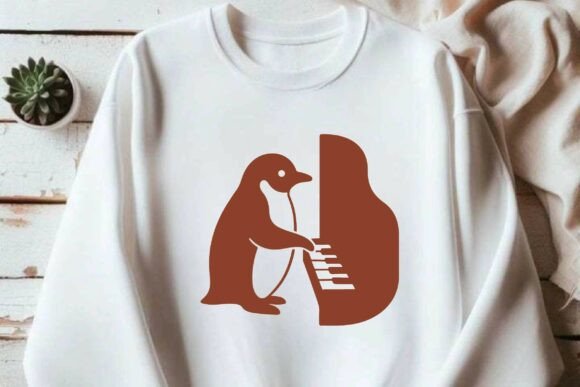
Penguin Playing with Piano Silhouette
As a designer who spends half her life staring at stitch charts and the other half worrying about whether a client’s custom order will actually hold up in the wash, I approach every new digital asset with a mix of hope and skepticism. We’ve all been there: you find a cute motif, buy the file, and then realize halfway through digitizing that the details are going to turn into a muddy mess on fabric. That is why I decided to put Penguin Playing with Piano Silhouette through its paces before recommending it for your own creative workflows.
This isn’t just another clipart download; it is a specific machine embroidery design intended for serious makers. Whether you are an Etsy seller looking to expand your holiday inventory or a hobbyist wanting to make a unique personalized gift, understanding how this design translates from screen to thread is crucial. Below is my practical review based on real-world application, focusing on clarity, versatility, and commercial viability.
The First Impression: Mood and Visual Personality
When I first loaded the ZIP folder containing the Penguin Playing with Piano Silhouette, the immediate takeaway was its strong graphic quality. The silhouette approach is smart. It relies on bold shapes rather than intricate, fragile lines, which is exactly what you want when working with thread. Thread has weight; it cannot replicate the subtle gradients of a vector illustration without risking clumping or breaking needles.
The mood here is playful yet sophisticated. A penguin interacting with a piano suggests a narrative—it’s not just a static animal portrait. For designers, this narrative element is gold. It allows you to create products that feel like stories rather than generic merchandise. Imagine a nursery wall hanging where this design serves as the focal point, or a high-end tote bag for a music teacher. The visual personality is distinct enough to stand alone but simple enough to integrate seamlessly into larger compositions.
Real-World Application: Where This Design Shines
I tested the concept of Penguin Playing with Piano Silhouette across several common product categories to see where it fits best. Here is how it performed in practical scenarios:
- Custom Apparel and Sweatshirts: On a heavyweight cotton sweatshirt, the silhouette pops beautifully. Because it is a solid shape, it works exceptionally well with fill stitch techniques. If you use a contrasting thread color for the fill, you get a clean, modern look that appeals to teenagers and adults alike. It feels less "cute" and more "graphic tee," which expands your market.
- Tote Bag Design: Canvas totes are a staple for any craft business. This design fits perfectly on the front panel of a standard canvas bag. The simplicity means it won’t overwhelm the fabric texture. It also pairs well with minimal text underneath, creating a balanced composition that looks professional and ready for sale.
- Baby Embroidery and Nursery Decor: For baby clothes, blankets, or crib sheets, the soft theme of a penguin combined with the musical element creates a soothing aesthetic. When stitched in pastel threads on white or cream fabric, it becomes a premium-looking personalized gift. Parents love items that are both adorable and visually calming.
- Embroidered Patch: The self-contained nature of the silhouette makes it ideal for creating iron-on patches. You can add a border stitch around the edge, and it becomes a versatile accessory for denim jackets, backpacks, or hats. This opens up a secondary revenue stream for Etsy sellers.
Technical Considerations and Stitch Clarity
While the concept is strong, execution is everything. Here is what you need to watch out for when using this embroidery file.
Stitch Density and Detail: Since this is a silhouette, the primary concern is ensuring the stitch density is appropriate for the fabric. If the density is too high, the fabric may pucker, especially on lighter materials like thin cotton tees or silk blends. Conversely, if it is too low, the backing might show through. Always check the digitizer’s notes regarding recommended stabilizers. A cut-away stabilizer is usually best for garments, while a tear-away might suffice for home decor items like pillow covers.
Thread Colors: The success of a silhouette design often hinges on contrast. If you embroider a black penguin on a black shirt, you lose the entire design. I recommend testing thread colors against your base fabric. White thread on dark navy or charcoal gray creates a striking, vintage-inspired look. Metallic threads can add a touch of luxury for special occasion gifts, such as wedding favors or anniversary presents.
Hoop Size Constraints: Ensure the design fits within your machine’s maximum hoop size. While most standard designs fit within 4x4 or 5x7 inches, always verify the dimensions provided in the file information. If you plan to enlarge the design, be aware that enlarging a silhouette can sometimes make the edges appear jagged if the original digitization wasn’t optimized for scaling.
Where to Use It Carefully
Not every project is a good match for Penguin Playing with Piano Silhouette. There are specific situations where this design might struggle:
- Small Hoop Sizes: If you are trying to squeeze this into a very small hoop (like 2x2 inches), the details of the piano keys or the penguin’s features might become indistinguishable. Keep the design large enough to breathe.
- Textured Fabrics: Avoid using this on heavily textured fabrics like bouclé or thick chenille unless you are using a heavy-duty stabilizer. The texture of the fabric can interfere with the smoothness of the satin stitch outlines, leading to a messy finish.
- Curved Surfaces: Embroidering directly onto curved surfaces like baseball caps or rounded mugs requires precise positioning. If the design is not properly anchored, the tension may vary across the curve, causing puckering. It is safer to embroider flat panels first and then attach them to curved items.
- Frequent Washing: If you are making items like kitchen towels or aprons that will be washed frequently, ensure the design is secured with proper underlay stitches. Without adequate stabilization, repeated washing can cause the silhouette to shift or distort over time.
Final Verdict for Makers and Sellers
Penguin Playing with Piano Silhouette is a versatile, high-quality addition to any digital embroidery file library. Its strength lies in its simplicity and emotional appeal. It avoids the pitfalls of overly complex digitization by sticking to strong, readable shapes. This makes it accessible for beginners while still offering enough depth for experienced designers to experiment with color and texture.
For commercial embroidery projects, this design offers great potential. It works well for seasonal collections (especially winter holidays) and evergreen themes (music, education, animals). As long as you test it on scrap fabric first, confirm your hoop size, and choose appropriate thread colors, you can confidently include this in your small shop product lineup.
Remember, the difference between a amateur-looking item and a professional one often comes down to these small technical details. By paying attention to stitch quality and fabric choice, you can transform this simple silhouette into a standout piece that customers will love. Whether you are creating a handmade product for yourself or a printable mockup for your online store, this design delivers on its promise of being a unique and engaging asset.