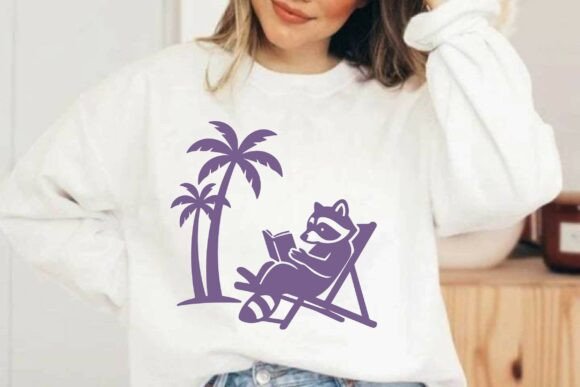
Raccoon Relaxing on Beach Chair Clipart
As a designer who spends more time than I care to admit staring at stitch density charts and fabric swatches, I have learned that the success of an embroidery project often hinges on the initial concept. It is not just about whether the machine can physically execute the design; it is about whether the finished piece feels intentional, cohesive, and desirable. When evaluating Raccoon Relaxing on Beach Chair Clipart, my first thought was not technical—it was emotional. The mood is instantly recognizable: lazy, sunny, and effortlessly cool. This is exactly the kind of visual personality that translates well into wearable art and home decor, provided the execution matches the charm.
The First Impression: Mood and Visual Personality
In the world of digital product selling and handmade boutiques, atmosphere sells. A raccoon lounging on a beach chair does more than depict an animal; it depicts a state of mind. For crafters and Etsy sellers looking to tap into the "cottagecore" or "whimsical summer" trends, this design offers a strong narrative hook. The layout appears balanced, suggesting that the focal point—the raccoon—is distinct from its surroundings, which is crucial for clear stitching.
From a purely aesthetic standpoint, the character’s relaxed posture invites a softer approach to stitching. It suggests that the design might rely heavily on smooth curves rather than aggressive, jagged edges. This is promising for reducing thread breaks and maintaining a clean finish. However, as any experienced embroiderer knows, cute does not always mean easy. The challenge lies in translating those soft, organic shapes into stable stitches without losing the playful expression that makes the clipart appealing in the first place.
Real-World Application: Where This Design Shines
I recently imagined using this machine embroidery design for a custom order—a set of oversized tote bags for a local summer festival. The scenario felt natural. A raccoon chilling by the sea fits perfectly with casual, beach-ready accessories. In this context, the design would likely be placed prominently on the front panel of a canvas tote, perhaps accompanied by simple text like "Beach Day" or "Chill Mode."
Beyond totes, this embroidery file has significant potential in the nursery and baby market. There is a growing demand for unique, non-generic baby apparel. A sweatshirt embroidery featuring a raccoon relaxing could serve as a standout piece for a boutique brand. Similarly, for personalized gift items, such as monogrammed kitchen towels or aprons, the whimsical nature of the subject adds a touch of humor and warmth that generic floral patterns simply cannot match. It bridges the gap between a standard craft fair product and a thoughtful, curated item.
For small business owners, the versatility of this graphics asset extends beyond physical goods. It works exceptionally well as a printable mockup element. If you are selling digital designs or offering custom services, having a high-quality visual reference helps buyers visualize the final result. The illustrations style lends itself to clean, modern branding, allowing shop owners to maintain a consistent aesthetic across their online storefronts.
Technical Considerations and Potential Pitfalls
While the concept is strong, practical application requires caution. Not every surface is created equal, and certain materials will test the limits of even the best digitizing. I would advise against placing this design on highly textured fabrics like heavy bouclé wool or thick terry cloth. The intricate details of the raccoon’s face and the texture of the beach chair could get lost, resulting in a muddy appearance that fails to capture the original artwork’s intent.
Stretchy fabrics present another hurdle. When stitching on knitwear or spandex blends, the tension must be carefully managed. If the stitch density is too high, the fabric may pucker, distorting the relaxed posture of the character. For curved surfaces like caps or hats, the design needs to be adapted to follow the contour of the brim. A flat placement on a curved cap might look distorted once the hoop tension is released.
Furthermore, consider the scale. While this embroidery project looks great on a large tote bag, attempting to shrink it down to fit a tiny embroidered patch or a baby’s onesie chest area requires careful review. Small details, such as the eyes or the texture of the fur, may become indistinguishable if the hoop size is too small relative to the design complexity. Always inspect the smallest elements before committing to production.
Color and Contrast Strategy
Thread color selection is critical for bringing out the character’s personality. On light backgrounds, darker threads will provide necessary contrast, ensuring the raccoon stands out. However, on dark fabrics, you will need to use underlay stitches effectively to prevent the top thread from showing through unevenly. Testing your thread colors on scrap fabric of the same material is non-negotiable. What looks vibrant on a screen may appear dull or garish in person depending on the sheen of the polyester or rayon thread used.
Practical Designer Notes for Execution
To ensure your finished product meets professional standards, I recommend following a strict testing protocol. Start by digitizing a test version and running it on a stabilizer that matches the weight of your final fabric. If you are working with a lightweight cotton for a tea towel, a tear-away stabilizer might suffice. For heavier denim or fleece, a cut-away stabilizer will provide the long-term stability needed to prevent distortion after washing.
Inspect the design in black and white mockups. This simple step helps you evaluate the balance of light and dark areas without the distraction of color. It reveals whether the satin stitch borders are dense enough to cover the fabric underneath and whether the fill stitch areas have adequate spacing to avoid bulkiness. Additionally, check whether the design works for both personal and commercial projects. Ensure you have the proper licensing rights if you intend to sell the finished items, as this affects your ability to profit from the commercial embroidery work.
Final Verdict
Raccoon Relaxing on Beach Chair Clipart is a charming, versatile asset that holds real promise for creative entrepreneurs. It offers a unique angle for craft business owners looking to differentiate their offerings in a crowded marketplace. Whether you are creating holiday embroidery gifts, launching a new line of boutique branding merchandise, or simply adding a fun touch to your own wardrobe, this design provides a solid foundation.
Success, however, depends on your preparation. By respecting the limitations of fabric and thread, and by treating the digitization process with the same care you would apply to the artwork itself, you can transform this digital clipart into a tangible, high-value handmade product. It is not just a picture of a raccoon; it is an opportunity to create something that brings a smile to the wearer’s face—and that is the ultimate goal of any skilled embroiderer.