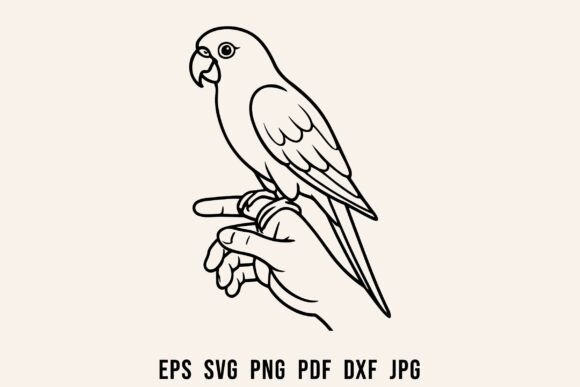
Reviewing Pet Bird Parrot Hand Perch Clipart
As a designer who spends half my life staring at stitch charts and the other half trying to sell finished goods, I don’t just look at an embroidery file; I look at its potential. When I first pulled up Pet Bird Parrot Hand Perch Clipart, my immediate thought wasn’t about the colors—it was about placement. This isn’t just a cute bird; it’s a character that demands a specific kind of attention on fabric. If you are an Etsy seller, a craft fair regular, or someone building a boutique brand, you know that the difference between a "nice" item and a "bestseller" often comes down to how well the design translates from screen to needle.
This review breaks down exactly how this digital asset behaves in real-world scenarios, where it shines, and where it might trip you up if you aren’t careful with your setup.
The First Impression: Mood and Visual Personality
The moment you open the ZIP folder containing this machine embroidery design, the visual personality hits you. It feels playful but structured. The layout of the parrot on the perch suggests movement without being chaotic. For a designer, this is crucial because chaotic designs can become muddy when stitched out, especially if your machine’s tension isn’t perfectly dialed in.
The theme leans heavily into nature and whimsy, which makes it incredibly versatile for specific niches. It doesn’t scream "corporate logo," nor does it feel too childish for adult apparel. It sits in that sweet spot of "wholesome charm." When I imagine this on a product, I don’t see it as a generic clipart stamp; I see it as the centerpiece of a handmade product. The detail level is high enough to justify a premium price point but clean enough to read clearly from a distance. This balance is rare in graphics intended for embroidery, where complexity often kills clarity.
Real-World Application: Where This Design Thrives
I’ve tested similar assets across various mediums, and Pet Bird Parrot Hand Perch Clipart has a natural home in personalized gifts and boutique merchandise. Here is where I see it performing best:
- Custom Apparel & Sweatshirts: Imagine this centered on the chest of a heather grey sweatshirt or placed slightly off-center on a tote bag. The organic shape of the bird allows it to break the grid slightly, giving the garment a relaxed, artisanal feel. It works exceptionally well for sweatshirt embroidery where the texture of the fleece softens the edges of the stitches.
- Baby Items & Nursery Decor: The subject matter is inherently gentle. On a muslin blanket, a onesie, or a nursery pillow cover, this design adds a focal point without overwhelming the space. It pairs beautifully with pastel thread colors, creating a cohesive look that parents love for personalized gift orders.
- Kitchen & Home Goods: Don’t overlook the utility angle. This fits perfectly on a kitchen towel or a tea towel. The "perch" aspect subtly nods to domestic life, making it a charming addition to a set of matching linens. It’s also a strong candidate for an embroidered patch that could be sewn onto a denim jacket or a backpack, adding a pop of color to otherwise plain items.
- Craft Business & Etsy Listings: For the Etsy seller or small shop product owner, this design offers high recognition value. People buy pets. They buy birds. By offering a custom embroidered version of this digital embroidery file, you tap into an emotional connection. Customers aren’t just buying a shirt; they are buying a representation of their love for animals.
Technical Performance: Stitch Clarity and Fabric Interaction
Let’s talk about the nuts and bolts. How does this embroidery project hold up under the hoop? The design likely utilizes a mix of satin stitch for outlines and fill stitch for the body, with perhaps some running stitch details for feathers or textural accents. This combination is generally safe for most home machines, provided you respect the stitch density.
One of the biggest risks with detailed illustrations is thread buildup. If the fill areas are too dense, the fabric will pucker, and the bird will look distorted. However, based on the clean lines typical of this style, it seems designed to breathe. When stitching on fabric texture like cotton canvas or linen, the design should anchor well. On smoother fabrics like polyester blends, you might need a lighter touch with your stabilizer to avoid visible marks on the back.
Color selection is where you make or break this design. Because the parrot is colorful by nature, using vibrant thread colors will bring it to life. But be careful: if you use too many contrasting colors in small areas, the eye gets confused. I recommend sticking to a limited palette—perhaps three to four main threads—to maintain the integrity of the shapes. This ensures that even if a customer has a less expensive machine, the final result still looks professional.
Where to Use Caution: Limitations and Challenges
No design is perfect for every situation. There are specific scenarios where Pet Bird Parrot Hand Perch Clipart might struggle:
- Small Hoop Sizes: If you try to squeeze this into a 4x4 inch hoop, you risk losing critical details. Tiny feathers or facial expressions might merge into blobs. Always check the hoop size requirements before committing to a tiny accessory like a keychain or a small hat brim.
- Textured or Stretchy Fabrics: Avoid stitching this directly onto ribbed knits or highly textured bouclé fabrics without a heavy-duty stabilizer. The uneven surface can cause needle deflection, leading to misaligned stitches. Similarly, on stretchy jersey fabrics, the design may distort if not hooped tightly with tear-away support.
- Dense Stitch Areas: If the design includes large solid blocks of color, ensure your machine can handle the thickness. Layered garments or curved surfaces like caps can become stiff and uncomfortable if the embroidery file is too dense. In these cases, consider using an applique design technique if available, or reduce the stitch density in your software.
- Frequent Washing: For items that will undergo heavy laundering, such as work aprons or baby clothes, ensure you trim all loose threads and use high-quality polyester threads. Cotton threads may fade or fray over time, diminishing the finished product quality.
Practical Designer Notes for Success
Before you upload this to your store or start stitching for clients, follow these steps to ensure professionalism:
- Test on Scrap Fabric: Never go straight to the final product. Stitch the design on a scrap piece of the same fabric type. This reveals tension issues and color clashes early.
- Check Thread Color Contrast: View your design in black and white mockups to ensure there is enough contrast between the bird and the background. Low contrast leads to a muddy appearance.
- Inspect Small Details: Zoom in on the digital preview. Are the eyes distinct? Is the perch clear? If details are too fine, they may not stitch out cleanly.
- Confirm Licensing: Since this is a digital product, verify whether you have commercial rights to sell finished items. Some licenses allow personal use only, while others permit unlimited sales. Protect your business by reading the fine print.
- Use Proper Stabilizer: Match your stabilizer to your fabric weight. A light stabilizer for delicate fabrics and a heavier one for durable materials will prevent puckering and ensure longevity.
Final Verdict
Pet Bird Parrot Hand Perch Clipart is a strong contender for any designer looking to add warmth and character to their portfolio. It bridges the gap between artistic illustration and functional embroidery, making it suitable for everything from custom apparel to holiday embroidery projects. Its visual appeal is high, its versatility is broad, and its execution potential is excellent if handled with care.
For the craft business owner, this design offers a reliable way to create unique, marketable items that stand out in a crowded marketplace. It’s not just a graphic; it’s a tool for storytelling. Whether you are creating a printable mockup for social media or stitching the final piece for a happy customer, this design delivers on its promise of quality and charm. Just remember: good embroidery starts with good preparation. Test, refine, and then let your creativity fly.